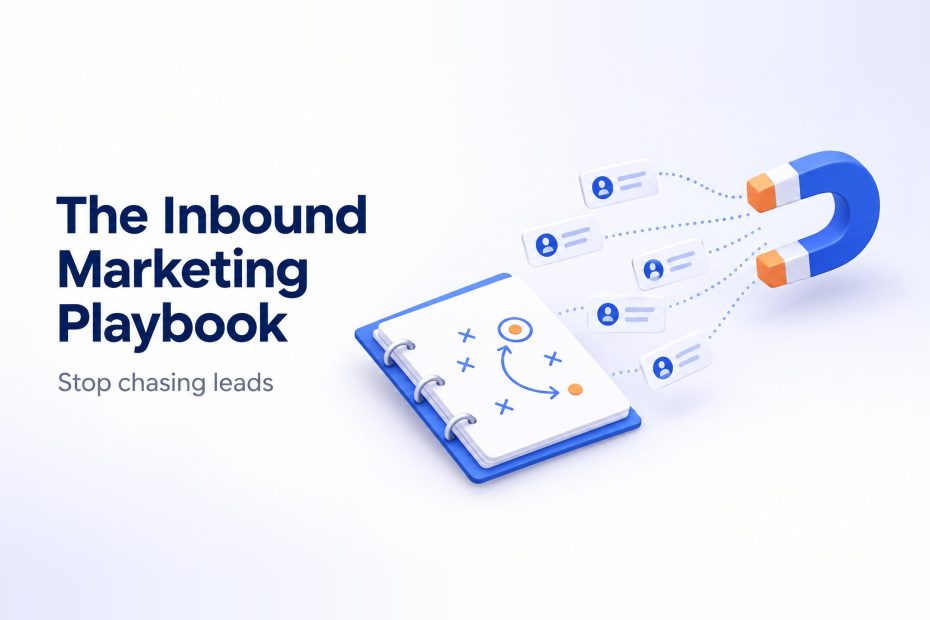
If your week looks like cold emails nobody answers, follow ups that go nowhere and a pipeline that dries up the moment you stop pushing, you’re not alone. Most growing businesses hit this wall. The problem usually isn’t effort. It’s that the whole system depends on you going out and finding people, one at a time.
Inbound marketing flips that. Instead of chasing buyers, you put useful answers where they’re already looking, and the right people come to you. This inbound marketing playbook walks through how to build that system step by step, without throwing out what already works.
Why chasing leads stops working
Chasing feels productive because there’s always something to do. Another list to email. Another call to make. Another ad to boost.
But buyers have changed. Most of them research on their own long before they talk to a salesperson. They read articles, compare options, ask peers and check reviews. By the time your cold email lands, they’ve either already made up their mind or they aren’t anywhere near ready.
That’s why so many outbound efforts feel like pushing a boulder uphill. You’re interrupting people at the wrong moment, and they can tell. We cover the long term cost difference in more detail in Why Inbound Marketing Outperforms Paid Ads in the Long Run.
What inbound marketing actually is
Inbound marketing is a way of attracting buyers by being genuinely helpful at every stage of their decision. It has three jobs:
- Attract the right people with content that answers their questions.
- Convert visitors into leads by giving them a good reason to share their details.
- Nurture those leads until they’re ready to talk to sales.
When those three parts connect, you get a pipeline that keeps filling while you focus on closing. When one is missing, the whole thing leaks. You can read more about how we approach this on our inbound methodology page.
Step 1: Get crystal clear on who you want to attract
Every strong inbound marketing strategy starts with one question: who is this for?
“Small businesses” or “marketing managers” isn’t specific enough. You want to know what keeps your ideal buyer up at night, what words they use when they describe their problem, and what they’ve already tried that didn’t work.
A simple way to start:
- Talk to your last five best customers. Ask what made them start looking for a solution.
- Ask your sales team which questions come up on almost every call.
- Look at the objections that most often stall a deal.
Those answers become the raw material for everything else in this playbook.
Step 2: Build content around real buyer questions
Once you know the questions, answer them better than anyone else. Not with generic “ultimate guides”, but with content that speaks to one specific problem at a time.
Think about the buyer’s journey in three loose stages:
- Early: they know something is wrong but haven’t named it. (“Why are our leads so low quality?”)
- Middle: they’re exploring ways to fix it. (“Inbound vs outbound for B2B”)
- Late: they’re comparing providers. (“What to ask before hiring a HubSpot partner”)
Most businesses only create late stage content, which means they miss everyone who isn’t ready yet. Good inbound lead generation covers all three.
To find the exact phrases your buyers type into Google, our guide on how to find the keywords your buyers are actually searching for is a practical place to start.
Step 3: Give visitors a reason to raise their hand
Traffic is nice. Leads are better. The bridge between the two is a conversion point that’s worth the visitor’s time.
That might be:
- A checklist or template that solves a small piece of their problem
- A short assessment or audit
- A webinar or recorded walkthrough
- A free consultation, for people who are already close to buying
The rule is simple: the offer should match where the visitor is. Someone reading an early stage article isn’t ready for a sales call, but they might happily download a checklist.
Make every page end with a clear next step. A blog post that just stops is a missed opportunity.
Step 4: Nurture leads instead of dropping them
This is where most inbound efforts quietly fall apart. Someone downloads a guide, gets one automated email, and then hears nothing for months. Or worse, they get a sales call the next morning when they were only browsing.
Lead nurturing fixes that gap. A good nurture sequence:
- Sends a few genuinely useful emails tied to what the lead first showed interest in
- Shares a case for change, not a hard pitch
- Watches for signals that they’re ready (visiting pricing pages, opening several emails, booking a call)
- Hands the lead to sales at the right moment, with context
This is also where a CRM like HubSpot earns its keep, because it lets marketing and sales see the same history for every contact.
Step 5: Measure what matters and keep improving
It’s easy to track page views and feel good. It’s more useful to track the things that connect to revenue:
- Which pieces of content bring in leads, not just visitors
- How many leads move from first conversion to sales conversation
- How long that journey takes
- Which channels bring in your best customers
Review these monthly. Double down on content that converts, and update or retire what doesn’t.
Common mistakes that slow inbound down
Inbound takes time to build, and a few habits make it take even longer:
- Expecting results in four weeks. Inbound compounds. The first few months are about laying foundations.
- Publishing without a plan. Random topics attract random visitors.
- No conversion path. Great content with no next step leaks leads.
- Sales and marketing working separately. If sales doesn’t trust the leads, they won’t follow up properly.
We go deeper on these traps in Why Most Inbound Marketing Strategies Fail in Year One.
You don’t have to choose between inbound and outbound
One last point, because it trips a lot of teams up. Building an inbound engine doesn’t mean you have to switch off everything else overnight. Paid ads and outreach can still play a role. The difference is that they stop carrying the whole load. Over time, inbound takes more of the weight, your cost per lead drops, and your pipeline stops depending on how hard you pushed last week.
Ready to stop chasing? Build your inbound marketing playbook
If your team is tired of working harder for fewer results, it might be time to build a system that brings buyers to you. Digital Friks helps businesses plan, build and run inbound programs that turn content into a steady flow of qualified leads.