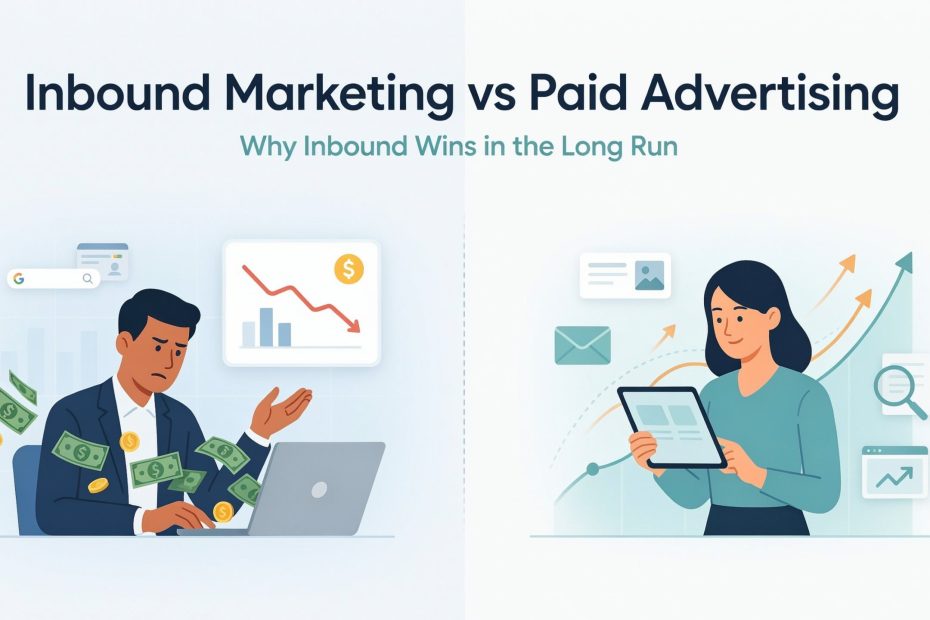
Many businesses invest heavily in advertising because it promises instant traffic and quick sales. Seeing visitors arrive on your website within hours of launching a campaign feels rewarding. However, there is one challenge that many companies experience sooner or later. Once the advertising budget runs out, the traffic often disappears as well. This is why many business owners compare Inbound Marketing vs Paid Advertising before deciding where to invest their marketing budget. While paid ads can generate immediate results, inbound marketing helps businesses build a lasting online presence that continues to bring value over time.
The biggest strength of inbound marketing is that it focuses on helping people instead of interrupting them with promotional messages. By publishing useful content, improving your website for search engines, and building trust through consistent communication, you attract people who are already looking for your products or services. This approach creates long-term relationships with customers, improves search engine rankings, and lowers customer acquisition costs. If you are planning to reduce your dependence on paid campaigns, understanding how inbound marketing works is the first step toward building sustainable business growth.
What Is Inbound Marketing?
Inbound marketing is a digital marketing approach that attracts potential customers by providing useful and relevant content instead of directly promoting products through advertisements.
Rather than asking customers to buy immediately, inbound marketing answers their questions, solves their problems, and guides them through the buying journey. It focuses on building trust first, which naturally leads to better engagement and higher conversion rates.
A complete inbound marketing strategy usually includes:
- Search Engine Optimization (SEO)
- Content marketing
- Blog writing
- Email marketing
- Social media marketing
- Landing pages
- Lead nurturing
- Marketing automation
Each of these channels works together to attract visitors, convert them into leads, and eventually turn them into loyal customers.
If you’re planning to build a stronger long-term marketing foundation, having a clear Inbound marketing strategy can help you attract qualified leads consistently.
What Is Paid Advertising?
Paid advertising is a marketing method where businesses pay platforms such as Google, Facebook, Instagram, LinkedIn, or YouTube to display their advertisements to selected audiences.
Common examples include:
- Google Search Ads
- Google Display Ads
- Facebook Ads
- Instagram Ads
- LinkedIn Sponsored Content
- YouTube Ads
- PPC (Pay-Per-Click) campaigns
The biggest advantage of paid advertising is speed. You can launch a campaign today and begin receiving visitors within minutes.
However, paid advertising has one major limitation. Every click costs money, and once your campaign ends, your visibility often disappears with it.
That is the biggest difference when comparing Inbound Marketing vs Paid Advertising.
Inbound Marketing vs Paid Advertising: Understanding the Difference
Although both strategies aim to generate leads and increase sales, they work in very different ways.
| Inbound Marketing | Paid Advertising |
| Builds long-term traffic | Generates immediate traffic |
| Focuses on valuable content | Focuses on promotional campaigns |
| Continues working after publication | Stops when the budget ends |
| Builds customer trust | Focuses on quick conversions |
| Lower long-term acquisition cost | Continuous advertising expenses |
| Improves SEO and organic visibility | Improves short-term visibility |
The best marketing strategy depends on your business goals, but companies looking for sustainable growth often invest more heavily in inbound marketing over time.
Why Inbound Marketing Outperforms Paid Ads in the Long Run
It Creates Long-Term Organic Traffic
One of the biggest reasons businesses invest in inbound marketing is its ability to generate organic traffic for months or even years.
When you publish a high-quality article that answers real customer questions, search engines continue recommending that content to new visitors. Every new blog becomes another opportunity for people to find your website naturally.
Unlike paid campaigns, quality content does not stop working after your marketing budget is exhausted.
A single well-optimized article can continue generating traffic long after it has been published.
This is one of the strongest advantages of Inbound Marketing vs Paid Advertising.
Better Return on Investment Over Time
Marketing should always be viewed as an investment rather than an expense. Creating valuable content requires time, research, and planning. However, once that content begins ranking on search engines, it can continue attracting visitors without additional advertising costs. Paid advertising works differently because every click costs money, every campaign requires a dedicated budget, and new advertising expenses begin each month to keep traffic coming.
Inbound marketing gradually reduces these ongoing costs because your existing content keeps attracting new visitors. For businesses looking to improve digital marketing ROI, inbound marketing often provides stronger long-term returns.
Customers Trust Helpful Content More Than Advertisements
Modern customers prefer researching before making purchasing decisions. Modern customers prefer researching before making purchasing decisions. They read articles, compare products, watch videos, search for reviews, and ask questions before choosing a product or service. They want to understand their options and feel confident that they are making the right decision.
Inbound marketing supports all of these behaviors by providing educational content instead of promotional messages.
When your business consistently publishes useful information, customers begin viewing your company as a trusted source instead of just another advertiser.
Trust is one of the biggest reasons inbound marketing generates higher-quality leads.
Businesses aiming to improve Inbound Marketing for Company Awareness often use educational content to build credibility before asking customers to make a purchase.
Inbound Marketing Helps Throughout the Entire Customer Journey
Every customer follows a journey before making a purchase.
Some people are only learning about their problem.
Others are comparing different solutions.
Some are ready to buy immediately.
Inbound marketing supports each stage by creating relevant content.
Awareness Stage
At this stage, customers want answers.
They search for information using search engines.
Helpful blog posts, educational videos, and informative guides attract these visitors naturally.
Consideration Stage
Now the customer understands the problem.
They begin comparing different solutions.
Case studies, comparison articles, webinars, and product guides help them evaluate available options.
Decision Stage
The customer is ready to choose.
Testimonials, pricing pages, customer reviews, free consultations, and product demonstrations help complete the buying decision.
Supporting every stage of the customer journey creates better relationships and improves conversion rates.
The Hidden Costs of Depending Only on Paid Advertising
Paid advertising delivers fast visibility, but it also comes with challenges that become more noticeable over time.
Advertising Costs Continue to Rise
Digital advertising has become increasingly competitive.
Businesses from every industry compete for the same keywords.
As competition increases, cost-per-click also increases.
This means businesses often spend more money simply to maintain the same level of traffic they received previously.
Traffic Stops Immediately
Imagine spending thousands of dollars each month on advertising.
Now imagine pausing that budget.
Website traffic can decline almost overnight.
This creates dependence on continuous advertising.
Inbound marketing reduces this risk by building a steady stream of organic visitors.
Paid Ads Build Less Brand Authority
Advertisements are designed to promote products.
Content is designed to educate people.
Over time, educational content naturally strengthens your brand authority because customers associate your business with helpful information rather than promotional messages.
This advantage becomes especially valuable in competitive industries.
How to Make the Switch from Paid Ads to Inbound Marketing
Switching from paid advertising does not mean turning off every campaign tomorrow.
The most successful businesses gradually shift their investment while continuing to use paid ads strategically.
Build an SEO Content Plan
Start by researching topics your customers search for every day.
Create articles that answer common questions.
Solve real problems.
Write comprehensive guides.
Publish consistently.
Over time, this builds your organic visibility.
Improve Your Website’s SEO
SEO remains one of the foundations of inbound marketing.
Focus on:
- Fast loading pages
- Mobile-friendly design
- Proper heading structure
- Internal linking
- Optimized images
- Meta titles
- Meta descriptions
- Keyword optimization
These improvements help search engines understand your content more effectively.
Create Evergreen Content
Evergreen content remains useful for a long time.
Examples include:
- Beginner guides
- Frequently asked questions
- Tutorials
- Industry tips
- Best practices
- How-to articles
Unlike seasonal campaigns, evergreen content continues generating traffic year after year.
Build an Email List
Email marketing helps maintain relationships after visitors leave your website.
Instead of paying repeatedly to reach the same audience, businesses can communicate directly through newsletters, educational emails, and personalized offers.
This improves customer retention while reducing advertising costs.
Continue Using Paid Ads Strategically
Paid advertising still has value.
It works particularly well for:
- Product launches
- Limited-time promotions
- Seasonal campaigns
- Event registrations
- Retargeting website visitors
The goal is not to eliminate paid advertising completely.
The goal is to reduce dependency on it while allowing inbound marketing to become your primary source of long-term lead generation.
Businesses focusing on sustainable lead growth often strengthen their efforts with Inbound marketing for demand generation, which attracts prospects who are actively searching for solutions instead of interrupting them with advertisements.
Common Mistakes Businesses Make During the Transition
Many companies expect inbound marketing to produce results within a few weeks.
Unlike paid advertising, inbound marketing takes time.
Avoid these common mistakes:
- Publishing content inconsistently.
- Ignoring SEO best practices.
- Writing promotional articles instead of educational content.
- Targeting highly competitive keywords only.
- Failing to update older content.
- Not measuring performance through analytics.
Patience and consistency are essential for long-term success.
Which Strategy Should Your Business Choose?
The answer is not always one or the other.
Paid advertising is excellent for immediate visibility and short-term campaigns.
Inbound marketing is ideal for building trust, improving organic rankings, generating qualified leads, and reducing long-term customer acquisition costs.
The strongest businesses combine both strategies.
Paid campaigns provide immediate momentum while inbound marketing creates sustainable growth that continues long after the advertisements stop running.
Final Thoughts
When comparing Inbound Marketing vs Paid Advertising, the difference becomes clear over time. Paid advertising delivers fast visibility, but it requires continuous spending to maintain results. Inbound marketing takes longer to gain momentum, yet it creates lasting value through high-quality content, search engine optimization, email marketing, and stronger customer relationships. It improves brand authority, attracts qualified leads, and continues generating organic traffic long after the content is published.
Businesses that invest in a well-planned inbound marketing strategy build marketing assets that keep working every day without increasing advertising costs. By combining valuable content, SEO, and customer-focused communication, you create a system that supports steady growth, strengthens customer trust, and delivers better returns for years to come.