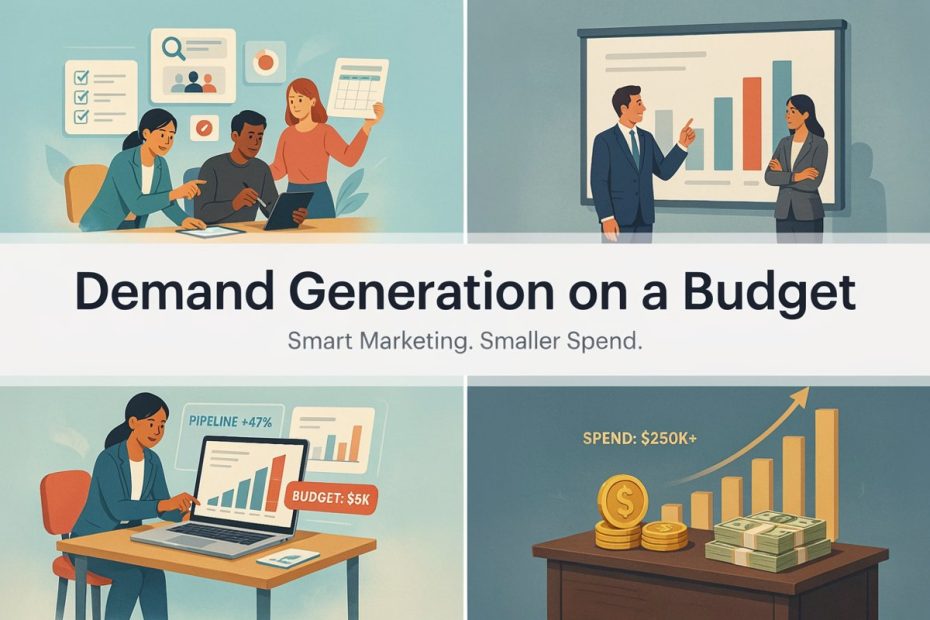
Demand generation on a budget can feel hard when large brands have more money, more staff, and bigger ad campaigns. Small marketing teams may not have the same reach. However, they can still build strong demand with a clear plan, useful content, and smart use of their time.
The goal is not to spend more than larger brands. It is to spend with more focus. A small team can reach the right buyers by choosing the right channels, answering real questions, and tracking what brings results. With the right approach, even a limited marketing budget can support steady growth and a stronger sales pipeline.
What Is Demand Generation on a Budget?
Demand generation is the process of creating interest in a product or service before a buyer is ready to make a purchase. It helps a company reach the right audience and build trust over time.
For smaller teams, demand generation needs a different approach. Large companies can spread money across many channels. Small teams often cannot. They need to focus on activities that have a clear link to their audience and goals.
Demand generation on a budget means using limited money and resources with care. It can include SEO, content marketing, social media, email, webinars, partnerships, and targeted paid campaigns.
The key is not to use every channel at once. Instead, a team should learn where its buyers spend time and what type of content helps them make decisions.
If you want a deeper look at the role of demand generation, read this guide on how demand generation creates a steady stream of qualified leads.
Why Small Teams Can Compete With Bigger Marketing Budgets
Having a large budget does not always mean having better results. Bigger brands can buy more traffic. Yet traffic alone does not create demand or sales.
Small teams can compete by being more focused. They can build content around a narrow audience and solve specific problems. They can also test new ideas without dealing with many layers of approval.
A small team may know its customers better than a large company. That knowledge can help it create content that feels more useful and direct.
For example, a software company serving small accounting firms does not need to reach every business owner. It can focus on the needs of accounting firms. It can create guides, case studies, videos, and emails around those needs.
This creates a more focused demand generation strategy. The team spends less while reaching people who are more likely to care about its offer.
How to Build a Lean Demand Generation Strategy
A strong strategy starts with focus. Before spending money, small teams should answer a few basic questions.
1. Define Your Ideal Customer
Start by identifying who you want to reach. Look at company size, role, industry, common problems, and buying needs.
Your ideal customer profile should guide every campaign. It should also shape your content topics and channel choices.
A clear customer profile can stop your team from wasting money on people who are unlikely to buy.
2. Set One Clear Goal
Do not try to measure everything at once. Pick a main goal for each campaign.
Your goal could be more website traffic, more product demos, better brand awareness, or more sales-qualified leads.
A clear goal makes it easier to decide where your budget should go.
3. Choose Fewer Marketing Channels
Small teams often make one common mistake. They try to be active everywhere.
That approach can spread your time too thin. Instead, choose two or three channels that match your audience.
For example, a B2B company may focus on SEO, LinkedIn, and email. Another business may get better results from webinars, partnerships, and organic search.
The best demand generation channels are not the same for every business.
7 Low-Cost Demand Generation Tactics for Small Teams
A limited budget does not mean your marketing has to be limited. Several tactics can create demand without requiring large ad spend.
1. Build Content Around Buyer Questions
Start with questions your target buyers ask before they purchase.
Look at sales calls, support tickets, online forums, search results, and customer emails. These sources can reveal useful content ideas.
Then turn those questions into blog posts, guides, videos, or short social posts.
This approach helps your content serve a real need. It can also support SEO and bring qualified visitors to your website.
2. Use SEO for Long-Term Traffic
SEO can be a strong choice for teams with limited budgets. Paid ads can stop bringing traffic when the budget runs out. Useful organic content can keep attracting visitors for much longer.
Focus on specific search terms that match your audience. Avoid trying to rank for every broad keyword in your industry.
Create helpful pages that answer the searcher’s question clearly. Add internal links between related pages. Keep your content easy to read and useful.
Over time, this can create a steady source of organic demand.
3. Repurpose Your Best Content
Small teams do not need to create something new every day.
One strong article can become several social posts. It can also become an email, a short video, a checklist, or a sales resource.
This saves time and helps your team get more value from each piece of content.
Content repurposing is especially useful when only one or two people handle marketing.
4. Use Email to Stay Connected
Email marketing can help you stay in front of people who are not ready to buy yet.
Share useful content, product updates, case studies, and answers to common questions. Avoid sending emails that only push a sale.
Good demand generation keeps the conversation going until the buyer is ready.
5. Partner With Related Businesses
Partnerships can help small teams reach new audiences without paying for large ad campaigns.
Look for businesses that serve a similar audience but do not directly compete with you.
You could work together on a webinar, guide, podcast, event, or content project. Both companies can then share the result with their audiences.
6. Use Social Media With a Clear Purpose
You do not need to post on every social platform.
Choose the platform where your target buyers are active. Then focus on useful posts that answer questions, share lessons, and show real examples.
For B2B brands, this may mean sharing practical insights on LinkedIn. For other businesses, another platform may make more sense.
The goal is not to chase every view. The goal is to create interest among the right people.
7. Test Paid Ads Carefully
Paid advertising can still work for a small team. The key is to avoid spending too much before you know what works.
Start with a small test. Use a focused audience and one clear offer. Track clicks, conversions, cost per lead, and sales results.
If a campaign performs well, increase the budget slowly. If it does not, learn from the data before spending more.
How SEO Supports Cost-Effective Demand Generation
SEO can play a major role in demand generation for small businesses because it connects your content with people who are already searching for answers.
A good SEO plan should cover more than keywords. Your team should also think about search intent, content quality, internal linking, technical SEO, and user experience.
For example, someone searching for “how to improve B2B sales” may not be ready to buy anything. They may simply need advice.
That person can still become a valuable future customer. Helpful content can build trust before a sales conversation starts.
This is why SEO works well with demand generation. It can bring people into your brand before they enter the buying stage.
How to Prioritize Your Demand Generation Budget
A small marketing budget needs clear priorities. Do not divide the same amount of money across every channel.
Start with activities that already show signs of success. If SEO brings qualified visitors, give it more attention. If webinars create strong leads, run more focused events.
Track what happens after a person clicks, reads, or signs up. A channel may bring many visitors but few sales opportunities.
Focus on Return, Not Just Reach
Reach can look impressive in a report. However, it does not always support revenue.
Instead, look at metrics such as:
- Qualified leads
- Sales opportunities
- Conversion rate
- Cost per lead
- Customer acquisition cost
- Pipeline value
- Revenue from marketing
- Return on marketing spend
These numbers can help a small team make better budget decisions.
Demand Generation vs Lead Generation
Demand generation and lead generation are related, but they are not the same.
The first creates awareness and interest. It helps buyers understand a problem and see your brand as a useful source of information. And the second focuses more on capturing contact details from people who show interest.
For example, a blog post may create demand by answering a buyer’s question. A downloadable guide may then turn some readers into leads.
Small teams need both. However, they should not judge demand generation only by the number of forms completed.
Some buyers may read your content for months before they contact your sales team.
Common Mistakes Small Teams Should Avoid
Trying to Match Competitors’ Spending
You do not need to copy a larger competitor’s budget. Their audience, team, goals, and business model may be different.
Build a plan that fits your own resources.
Chasing Every New Channel
A new platform may get attention, but that does not mean it will bring customers.
Test new channels only when they make sense for your audience.
Creating Content Without a Plan
Publishing content just to stay active can waste time.
Each piece should have a clear purpose. It should answer a buyer question, support SEO, build trust, or help move someone closer to a purchase.
Measuring Only Traffic
Traffic matters, but it is not the final goal.
Look at what happens after people arrive. Do they engage with your content? Do they return? Or do they become leads? Do they create sales opportunities?
These answers provide a better view of demand generation ROI.
How Small Teams Can Win With Less
A smaller budget can force a marketing team to become more focused. That can become an advantage.
Start with your audience. Learn what they need and what problems they want to solve. Then build useful content around those needs.
Choose a few demand generation channels instead of trying to use them all. Track results and put more resources into what works.
Most importantly, give your strategy time. Demand generation rarely creates strong results overnight. SEO, content, email, and brand trust often grow through steady effort.
You do not need the biggest marketing budget to compete. You need a clear audience, useful ideas, smart channel choices, and a way to measure results.
When every dollar and every hour has a purpose, small teams can build demand, support sales, and create a healthier pipeline without trying to outspend bigger brands.