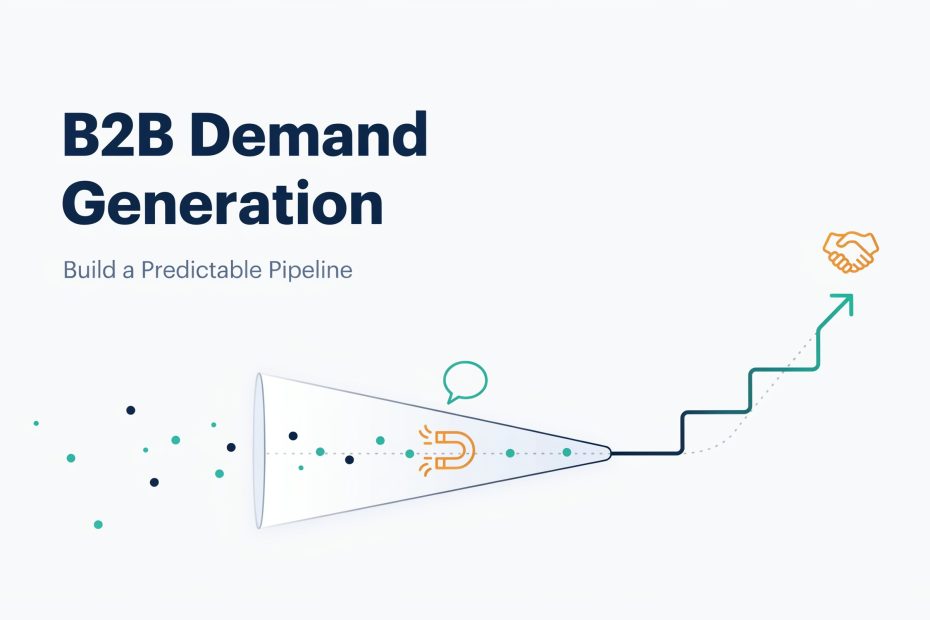
Most B2B companies chase leads. They run ads, send emails, and hope something sticks. But hope is not a strategy. B2B demand generation is what turns random leads into a steady, predictable pipeline of buyers who already trust you before sales even calls them.
If your pipeline feels like a roller coaster — full one month, empty the next — this guide will help. We will break down what demand generation really means, why it works better than basic lead gen, and how you can build a system that brings in qualified buyers month after month, without the guesswork.
What Is B2B Demand Generation?
B2B demand generation is the process of building awareness, trust, and interest in your brand before a buyer ever raises their hand. It is not just about collecting emails. It is about shaping how your audience thinks and feels about a problem, and then showing them you have the answer.
Unlike basic lead generation, which focuses on filling forms, demand generation focuses on the full B2B marketing funnel. It covers every stage: from a buyer who has never heard of you, to one who is ready to sign a contract.
Demand Generation vs Lead Generation
This is where many marketers get stuck. Lead generation asks, “How do I get more form fills?” Demand generation asks, “How do I create real interest so leads come to me naturally?”
Lead gen is short-term and transactional. Demand gen is long-term and relationship-based. One fills your CRM with names. The other fills your pipeline with buyers who are ready to talk.
Why a Predictable Pipeline Matters
A predictable pipeline means you always know, roughly, how many deals will close next quarter. You are not guessing. You are not panicking when a big client churns. Hence, you have a steady flow of demand feeding your sales team.
This is the real goal of any demand generation strategy. It is not about one viral post or one good month. It is about building a system that keeps working, even when you are not actively pushing it.
Building a B2B Demand Generation Strategy That Works
Let’s get into the actual steps. A strong demand generation framework rests on four pillars: audience clarity, content, channels, and follow-up.
1. Know Exactly Who You Are Talking To
Before you write a single blog post or run an ad, get clear on your buyer. What problems keep them up at night? What words do they use to describe those problems? Talk to your sales team. Read support tickets. Listen to sales calls if you can.
This step is often skipped, but it is the most important one. Without it, even great content falls flat because it speaks to no one in particular.
2. Create Content for Every Stage of the B2B Demand Generation Funnel
Your buyer does not move from stranger to customer in one step. They move through stages, and each stage needs different content.
- Awareness stage: Blog posts, guides, and social content that name the problem.
- Consideration stage: Comparison posts, case studies, and webinars that show your solution.
- Decision stage: Demos, pricing pages, and testimonials that remove the last doubts.
If you only create bottom-of-funnel content, you will miss the buyers who are not ready to buy yet but will be in a few months.
3. Pick the Right Channels for B2B Pipeline Generation
Not every channel works for every business. LinkedIn often works well for B2B because decision-makers spend time there. SEO content builds long-term, compounding traffic. Email nurtures leads who are not ready yet.
Pick two or three channels and do them well. Spreading thin across ten platforms usually leads to weak results everywhere.
4. Fix Sales and Marketing Alignment
Here is something many companies miss. Demand generation cannot work if sales and marketing are not on the same page. If marketing sends leads sales does not trust, or sales asks for leads marketing cannot produce, the whole system breaks down.
Set up regular meetings between both teams. Agree on what a “qualified lead” actually means. Share feedback both ways. Sales and marketing alignment is not a nice extra. It is the glue that holds your pipeline together.
Account-Based Marketing as Part of Your Demand Gen Mix
For high-value accounts, broad demand generation alone may not be enough. This is where account-based marketing, or ABM, comes in. Instead of casting a wide net, ABM targets specific companies with personalized content and outreach.
Many B2B teams blend both. They use broad demand generation to build general awareness, then layer ABM on top for their top target accounts. This combination often brings the best results.
Tracking the Right Demand Generation Metrics
You cannot improve what you do not measure. Some of the most useful demand generation metrics include:
- Marketing qualified leads (MQLs) and how many turn into sales qualified leads (SQLs)
- Pipeline velocity, or how fast leads move through your funnel
- Cost per opportunity, not just cost per lead
- Content engagement at each funnel stage
Tracking only top-of-funnel numbers, like website visits, can be misleading. A page with fewer visits but more booked demos is doing its job better than a page with huge traffic and no conversions.
Common Mistakes That Break the Pipeline
Even good teams fall into traps. Here are the ones we see most often:
- Focusing only on quick wins instead of long-term trust building
- Ignoring middle-of-funnel content, so leads go cold before they are ready to buy
- Letting sales and marketing work in silos
- Measuring success by lead volume instead of lead quality
Avoiding these mistakes alone can make a big difference in how steady your pipeline feels.
Final Thoughts
Building a predictable pipeline does not happen overnight. But once your B2B demand generation engine is running, it keeps bringing in buyers who already know and trust you. Start with a clear audience, build content for each funnel stage, pick your best channels, and keep sales and marketing tightly aligned.
Do this consistently, and you will stop chasing leads. They will start coming to you.