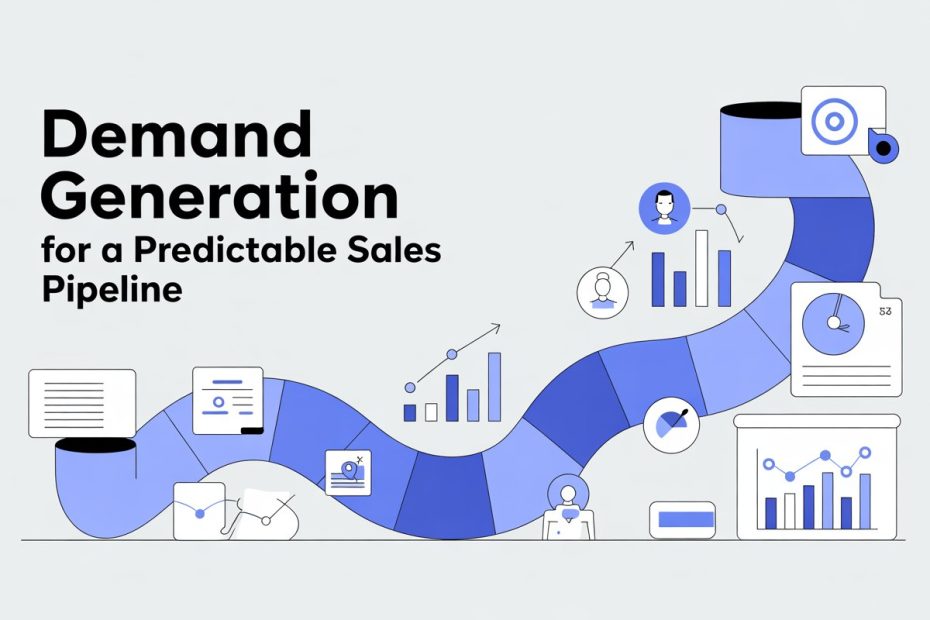
Building a consistent sales pipeline is one of the biggest challenges for businesses. Without a reliable system, sales teams often struggle with inconsistent leads, missed targets, and unpredictable revenue. Implementing Demand Generation for a Predictable Sales Pipeline ensures that your company maintains a steady flow of qualified prospects, making growth planning much more straightforward.
A predictable sales pipeline allows businesses to allocate resources efficiently, reduce wasted effort, and focus on leads that are most likely to convert. Companies that master this process gain a competitive edge, as their marketing and sales teams can work together to nurture leads strategically, shorten sales cycles, and generate consistent revenue.
Understanding Demand Generation
Demand Generation refers to a set of marketing strategies aimed at creating awareness, interest, and demand for your products or services. Unlike simple lead generation, demand generation emphasizes building relationships and educating prospects throughout the buying journey.
When applied effectively, it supports a predictable sales pipeline by attracting the right audience and delivering qualified leads to your sales team. Through methods like content marketing, social media campaigns, targeted ads, and email automation, demand generation for sales pipeline ensures that prospects are engaged and prepared to move through the sales funnel.
Why a Predictable Sales Pipeline is Essential
A predictable sales pipeline allows organizations to forecast revenue and plan operations confidently. Without predictability, sales performance can fluctuate, making resource allocation difficult and reducing team efficiency. By integrating demand generation strategies, businesses can create a consistent flow of high-quality leads that feed directly into their sales pipeline.
Companies can also use pipeline data to identify which marketing channels and campaigns are most effective. With insights from lead nurturing strategies and sales funnel optimization, businesses can adjust campaigns to improve conversion rates and maximize return on investment.
Core Elements of Demand Generation for a Predictable Sales Pipeline
Targeted Lead Generation
Identifying your ideal customers is the first step in building a predictable sales pipeline. Using buyer personas and market research, businesses can attract prospects who match their ideal profile, ensuring sales teams focus on leads with the highest likelihood to convert.
Content Marketing to Educate Leads
Creating high-value content such as blogs, case studies, ebooks, and webinars helps educate prospects about solutions and benefits. This not only builds trust but also positions your company as an authority. Educational content supports sales funnel optimization by keeping prospects engaged and moving steadily toward conversion.
Multi-Channel Engagement
Engaging leads across multiple channels like email, social media, and paid ads ensures wider reach and better quality leads. Consistent messaging across channels increases awareness, nurtures prospects, and strengthens your B2B lead generation efforts.
Marketing and Sales Alignment
Demand generation only succeeds when marketing and sales teams are aligned. Shared goals, regular communication, and coordinated strategies improve lead conversion, shorten sales cycles, and enhance overall pipeline efficiency.
Best Practices for Maintaining a Predictable Sales Pipeline
Lead Scoring and Segmentation
Segmenting leads based on engagement and readiness to buy allows sales teams to prioritize their efforts. Lead scoring ensures that pipeline management focuses on the most promising opportunities, improving conversion rates and shortening sales cycles.
Marketing Automation and CRM Tools
Automation tools help streamline repetitive tasks, track prospect behavior, and provide actionable insights. CRMs ensure timely follow-ups, making the pipeline more predictable while supporting data-driven decision-making.
Continuous Analysis and Improvement
A predictable sales pipeline requires ongoing monitoring. Measuring the effectiveness of campaigns, tracking conversion rates, and optimizing strategies ensures that demand generation continues to provide consistent results and improves revenue growth tactics over time.
Conclusion
Understanding why demand generation is the key to building a predictable sales pipeline is vital for companies that want consistent growth. By combining targeted lead generation, educational content, multi-channel engagement, and close alignment between marketing and sales, businesses can create a steady flow of qualified leads and reliable revenue.
A structured approach to demand generation ensures sales teams always have the right prospects at the right time. With a predictable sales pipeline, businesses can plan confidently, maximize efficiency, and focus on sustainable growth strategies.
FAQs
1. What is demand generation?
Demand generation is a set of marketing strategies designed to create awareness, interest, and demand for your products or services. Unlike simple lead generation, it focuses on nurturing prospects throughout their buying journey, helping build a predictable sales pipeline.
2. Why is a predictable sales pipeline important?
A predictable sales pipeline allows businesses to forecast revenue accurately, allocate resources efficiently, and reduce fluctuations in sales performance. It ensures that sales teams focus on high-quality leads generated through effective demand generation strategies.
3. How does demand generation improve lead quality?
By targeting the right audience, educating prospects with valuable content, and engaging them across multiple channels, demand generation attracts leads who are genuinely interested. This results in a higher conversion rate and a more efficient sales funnel.
4. What are some effective demand generation strategies?
Effective strategies include content marketing (blogs, webinars, ebooks), multi-channel campaigns (email, social media, paid ads), lead nurturing, and marketing automation. These tactics help maintain a steady flow of qualified leads in your sales pipeline.
5. How can marketing and sales alignment boost pipeline predictability?
When marketing and sales teams share goals and communicate regularly, leads move more smoothly through the sales funnel. This alignment ensures better pipeline management and increases the chances of converting prospects into customers.
6. Can demand generation help with B2B sales?
Yes, demand generation is particularly effective for B2B lead generation. By educating prospects, nurturing relationships, and delivering qualified leads to sales teams, businesses can create a reliable predictable sales pipeline for consistent revenue growth.
7. How do I measure the success of demand generation?
Success can be measured through metrics like lead quality, conversion rates, pipeline velocity, and overall revenue contribution. Regular analysis allows continuous optimization of campaigns to maintain a predictable sales pipeline.