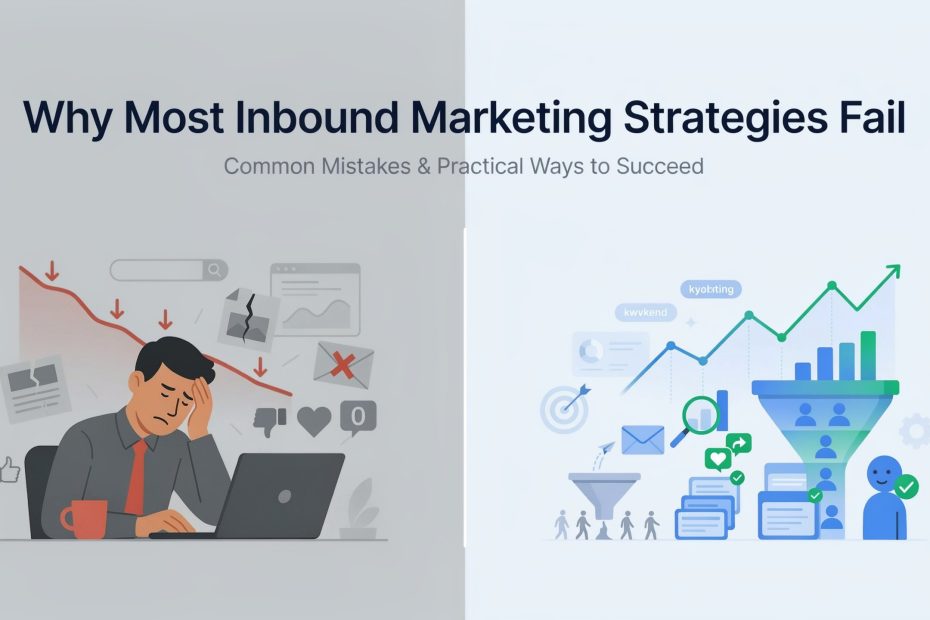
Many businesses invest time and money into content, social media, SEO, and email campaigns with high hopes, only to feel disappointed after a few months. The truth is that why inbound marketing fails is not because the method itself is ineffective. It often comes down to unrealistic expectations, poor planning, and inconsistent execution. Companies expect quick results from a strategy that is designed to build trust and long-term growth.
A successful inbound approach takes patience, the right audience, and a clear plan. When businesses understand the common mistakes made during the first year, they can avoid costly setbacks and create a stronger foundation for future success. This guide explains the biggest reasons inbound marketing struggles early on and shares practical steps that help businesses see better results.
Why Most Businesses Struggle With Their Inbound Marketing Strategy
Many companies start with excitement but without a clear direction. They publish a few blog posts, post on social media, and hope customers will start arriving. When that doesn’t happen, they assume inbound marketing doesn’t work.
The reality is different. An effective inbound marketing strategy requires planning, consistency, and a deep understanding of customer needs. Businesses that treat inbound marketing as a long-term investment often achieve better traffic, stronger relationships, and higher-quality leads over time.
Another common issue is expecting every piece of content to generate immediate sales. Content is meant to educate, answer questions, and build trust before asking readers to make a buying decision.
Common Reasons Why Inbound Marketing Fails
1. Setting Unrealistic Expectations
One of the biggest inbound marketing challenges is expecting fast results.
Unlike paid advertising, inbound marketing grows gradually. SEO takes time to improve rankings, and content needs time to earn trust from readers and search engines.
Businesses that expect hundreds of leads within a few weeks often stop too early. In many cases, meaningful growth appears after several months of consistent effort.
2. Creating Content Without Understanding the Audience
Publishing random content rarely produces good results.
Every article, video, or guide should answer real questions your audience is asking. If your content doesn’t solve problems, readers will leave without taking action.
Research your ideal customers by asking:
- What problems do they face?
- What questions do they search for?
- What information helps them make decisions?
Answering these questions improves your content marketing strategy and increases engagement.
3. Ignoring SEO From the Beginning
Many businesses write helpful content but forget about search engine optimization.
Without proper keyword research, internal linking, optimized headings, and user-friendly formatting, even great content may struggle to rank.
A strong SEO content strategy includes:
- Targeting one primary keyword
- Using related keywords naturally
- Writing descriptive headings
- Optimizing meta titles and descriptions
- Adding internal and external links
- Improving page loading speed
SEO should support every stage of your inbound marketing efforts.
What to Do Differently During Your First Year
The first year is the best time to build habits that create long-term success.
Build a Clear Content Plan
Instead of publishing whenever inspiration strikes, create a monthly content calendar.
Focus on topics that answer customer questions during every stage of the buying journey.
For example:
- Educational blog posts
- Step-by-step guides
- Case studies
- Industry updates
- Frequently asked questions
A structured plan keeps your marketing consistent and improves your chances of ranking in search engines.
If you’re creating your first inbound marketing strategy, this guide on Inbound marketing strategy explains how to build a stronger foundation.
Focus on Helping Before Selling
People rarely trust brands that constantly promote their products.
Instead, provide useful information that solves real problems.
Helpful content naturally builds credibility and encourages visitors to return when they are ready to buy.
This approach improves customer relationships while supporting long-term lead generation.
Measure the Right Metrics
Many businesses focus only on website traffic.
Traffic matters, but it doesn’t tell the whole story.
Instead, track:
- Organic traffic growth
- Time spent on pages
- Conversion rate
- Email subscribers
- Qualified leads
- Keyword rankings
These numbers provide a better picture of whether your inbound marketing success is improving.
Strengthen Brand Awareness Before Expecting Sales
Many companies overlook the importance of visibility.
Customers usually interact with a brand several times before making a purchase.
This is why Inbound Marketing for Company Awareness plays an important role in long-term growth. Creating educational content, sharing valuable resources, and answering customer questions consistently builds trust over time.
If your goal is to increase recognition before focusing on conversions, read this guide on Inbound Marketing for Company Awareness.
The stronger your brand becomes, the easier it is to attract qualified visitors who already trust your business.
Use Inbound Marketing to Generate Better Leads
Traffic alone doesn’t grow a business.
The real goal is attracting visitors who are likely to become customers.
One of the most effective ways to do this is by creating content that matches search intent and guides users through each stage of the customer journey.
Educational articles, downloadable resources, comparison pages, and helpful videos all support lead generation strategy while improving search visibility.
Businesses looking to improve their inbound marketing for demand generation can learn practical approaches from this article about Inbound marketing for demand generation.
Small Improvements Create Long-Term Results
Many businesses think they need a complete marketing overhaul.
Usually, that’s not necessary.
Small improvements made consistently often produce better results than major changes made once.
Some examples include:
- Updating older blog posts
- Improving internal links
- Writing better headlines
- Adding clear calls to action
- Publishing content regularly
- Monitoring analytics each month
These simple habits strengthen your inbound marketing strategy over time and help avoid many common inbound marketing mistakes.
Conclusion
Understanding why inbound marketing fails during the first year helps businesses avoid the mistakes that stop growth too early. Most failures happen because of unrealistic expectations, inconsistent publishing, weak SEO, or content that doesn’t address audience needs. None of these challenges are permanent.
With a well-planned inbound marketing strategy, consistent content creation, and regular performance reviews, businesses can build trust, increase organic traffic, and generate qualified leads over time. Stay focused on helping your audience first, improve your content with each new article, and allow your strategy enough time to deliver lasting results.
Frequently Asked Questions
1. Why do most inbound marketing strategies fail in the first year?
Most inbound marketing strategies fail because businesses expect quick results, publish content inconsistently, target the wrong audience, or overlook SEO. Inbound marketing is a long-term strategy that requires patience, planning, and regular optimization.
2. How long does it take for an inbound marketing strategy to show results?
While every business is different, most companies start seeing noticeable improvements within 6 to 12 months. Factors such as content quality, competition, SEO, and consistency all affect how quickly results appear.
3. What are the biggest inbound marketing mistakes to avoid?
Some of the most common inbound marketing mistakes include:
- Not understanding your target audience
- Publishing low-quality or inconsistent content
- Ignoring SEO best practices
- Focusing only on sales instead of providing value
- Failing to measure marketing performance
4. Is inbound marketing better than paid advertising?
Inbound marketing and paid advertising serve different purposes. Paid ads can generate immediate traffic, while inbound marketing builds long-term organic visibility, trust, and sustainable lead generation. Many businesses achieve the best results by using both together.
5. How can I improve my inbound marketing strategy?
You can improve your inbound marketing strategy by creating content that answers customer questions, performing keyword research, optimizing pages for SEO, publishing consistently, and reviewing analytics to identify what works best.
6. Why is SEO important for inbound marketing?
SEO helps your content appear in search engine results when people are looking for information related to your business. Without SEO, even valuable content may struggle to reach the right audience.
7. What type of content works best for inbound marketing?
Educational blog posts, how-to guides, case studies, videos, comparison articles, checklists, and FAQs are some of the most effective content types. The key is creating content that solves your audience’s problems and answers their questions.
8. How do I measure the success of an inbound marketing strategy?
You can measure success by tracking important metrics such as organic traffic, keyword rankings, lead generation, conversion rates, email subscribers, engagement, and return on investment (ROI).