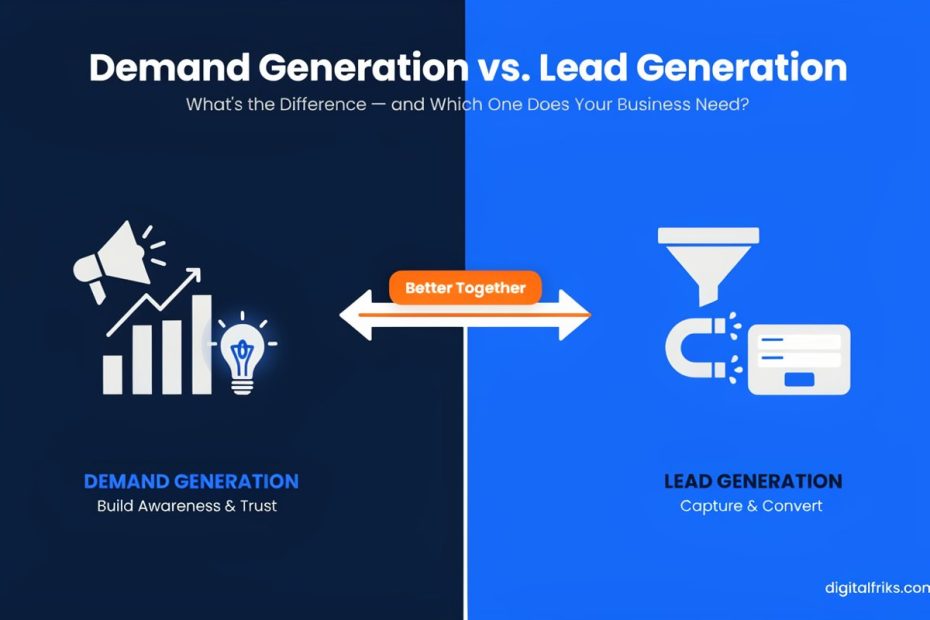
Most businesses want more customers. But many get confused about where to start — should you focus on building brand awareness first, or jump straight to collecting leads? This is exactly where understanding demand generation vs lead generation becomes so important. Both play a big role in growing your business, but they work in very different ways. Getting them mixed up can cost you time, money, and missed opportunities.
Think of it this way — you can’t fill a bucket that no one knows exists. Before people can become leads, they first need to know your business is out there and that you can solve their problems. That’s the job of demand generation. Lead generation then steps in to turn that interest into real action. Together, they form a strong marketing engine. This blog breaks both strategies down in a clear, simple way so you can make smarter decisions for your business.
What Is Demand Generation?
Demand Generation is the process of creating awareness and interest in your product or service. It’s about reaching people before they are ready to buy. The goal is to make your brand well-known and trusted — so that when someone has a problem you can solve, they think of you first.
This is a long-term strategy. It’s not about quick wins. It’s about building a real relationship with your audience over time. It includes things like:
- Blog posts and helpful articles
- Social media content
- Podcasts and webinars
- SEO and organic search traffic
- Thought leadership content and PR
You are not asking people to fill out a form or give you their contact info. You are simply helping them learn — and in return, they start to trust your brand.
How Demand Generation Works in Practice
Imagine you run a digital marketing agency. You start writing helpful blogs about common problems businesses face with their marketing. People read your content, watch your videos, and follow you on LinkedIn. They’re not ready to hire you yet — but they know who you are. A few weeks or months later, when they need help, they come to you. That’s demand generation working at its best.
It builds trust before the sale. And trust is what turns strangers into buyers.
What Is Lead Generation?
Lead generation is the process of capturing contact details from people who show interest in your product or service. These people are called leads. The goal is to bring them into your sales funnel so your team can follow up and guide them toward a purchase.
Lead generation uses more direct tactics. It usually asks people to take a specific action, such as:
- Filling out a contact or inquiry form
- Signing up for a free trial or demo
- Downloading a guide, checklist, or ebook
- Registering for a live webinar
- Responding to a targeted ad or cold email
Unlike demand generation, lead generation is more short-term focused. You are targeting people who are already showing interest and are ready to engage. Success here is measured by how many leads you collect and how many of those turn into paying customers.
How Lead Generation Works in Practice
Let’s go back to that digital marketing agency example. You write a helpful guide — “10 Ways to Get More Clients in 2026” — and put it on your website. To download it, visitors need to enter their name and email address. You now have a list of people who are interested in what you offer. Your sales team can follow up, send more helpful content, and move them toward a decision.
That’s lead generation in action — collecting genuine interest and turning it into conversations.
Demand Generation vs Lead Generation: The Key Differences
So, what exactly sets these two strategies apart? Here’s a simple, side-by-side comparison:
| Demand Generation | Lead Generation | |
| Goal | Build awareness and interest | Capture contact information |
| Focus | Top of the funnel | Middle to bottom of the funnel |
| Content Type | Ungated (free to access) | Gated (requires sign-up) |
| Timeline | Long-term | Short-term |
| Metrics | Brand awareness, traffic, engagement | Leads, cost per lead, conversion rate |
| Audience | People who don’t know you yet | People who are ready to engage |
The biggest difference is timing. Demand generation reaches people early — before they’re ready to buy. Lead generation reaches them when they’re close to making a decision.
Many businesses make the mistake of jumping straight to lead generation without building any awareness first. The result? Cold leads that don’t convert, a high cost per lead, and a frustrated sales team.
Why Both Strategies Matter for Your Business
Here’s the truth — you need both. The demand generation vs lead generation debate is often a false choice. These two strategies are not rivals. They’re partners. Each one needs the other to work at full strength.
If you only do demand generation, you’ll get a lot of attention but very few conversions. People will know your brand, but they won’t take the next step. On the other hand, if you only do lead generation, you’ll be fishing in a very small pond. You’ll only reach the small percentage of buyers who are already actively looking for a solution right now.
When you combine both, you build a full-funnel marketing strategy. You attract the right people, earn their trust, and then guide them toward becoming customers — naturally and without pressure.
When to Focus on Demand Generation
- You are entering a new market or niche
- Your brand is not yet well known
- You have a long sales cycle
- You want to lower your customer acquisition cost (CAC) over time
- You want to build long-term authority and credibility in your space
When to Focus on Lead Generation
- You need customers quickly
- Your brand already has good awareness in your market
- You have a clear offer that is ready to convert
- You have a strong sales team ready to follow up
- You want to measure direct ROI from your campaigns
The Right Balance Between Both
There’s no single correct ratio — it depends on your business stage, your goals, and how mature your market is. But here’s a general guide to get you started:
- Early-stage businesses: Put more weight on demand generation (around 60–70%). Your main job is to build awareness and trust first.
- Growth-stage businesses: Balance both equally (around 50–50) as you start converting your growing audience.
- Mature businesses: Lean more into lead generation (around 60%) while keeping demand gen active to maintain a healthy pipeline.
Track the right metrics for each. For demand generation, watch traffic growth, branded search volume, and content engagement. For lead generation, track your cost per lead, MQL-to-SQL conversion rate, and total pipeline value.
How to Use Demand Generation to Fuel Your Sales Pipeline
One of the most powerful moves you can make as a marketer is to directly connect your demand generation efforts to your sales pipeline. When your demand gen content brings in the right audience, your lead generation tactics have a much warmer pool to work with — and warm leads convert far better than cold ones.
A well-built demand generation for sales pipeline strategy means you’re not just creating noise online. You’re creating real touchpoints that guide potential buyers through every stage of the funnel — from first hearing about your brand, to trusting you enough to engage, to finally choosing you over a competitor.
This is exactly why businesses that invest in both strategies together tend to see lower cost per lead, higher conversion rates, and a much healthier sales pipeline over time.
Common Mistakes Businesses Make
Understanding demand generation vs lead generation is one thing. Avoiding common pitfalls is another. Here are a few mistakes you should watch out for:
Gating Everything
Some businesses gate every single piece of content behind a form, thinking it will maximize leads. But if people don’t know you yet, they won’t fill a form just to read a basic blog post. You lose the chance to build awareness at all.
The smarter move is to keep most content open and free — blogs, videos, social posts. Gate only your high-value assets like in-depth guides, free tools, or exclusive reports that signal serious interest from buyers.
Measuring the Wrong Things
Many marketing teams measure demand generation success the same way they measure lead generation — by counting form fills and leads. That’s the wrong approach.
For demand generation, look at softer signals: Are more people searching your brand name? Is your website traffic growing? Are people sharing your content? These are the signs that your demand gen is working — even if the leads aren’t flowing in yet.
Running Both in Silos
Your demand gen and lead gen teams need to talk to each other. If your content team doesn’t know what kinds of leads are converting best, they can’t create the right demand. And if your sales team doesn’t know what content prospects read before reaching out, they’re going into every conversation blind.
Align your teams, share data, and treat both strategies as one connected system.
Final Thoughts
The conversation around demand generation vs lead generation often comes down to one simple misunderstanding — people think they have to choose one or the other. But the most successful businesses know these two strategies work best when they work together.
Start by building awareness. Help your audience understand their problems. Position your brand as a helpful, trusted resource. Then, once people know and trust you, make it easy for them to take the next step.
When you align your demand generation strategy with your lead generation tactics, you stop chasing cold, hard-to-convert leads and start attracting warm, ready-to-buy ones. That makes your entire sales process faster, cheaper, and far more effective — for your team and your business.
Want to grow your business with a smarter marketing approach? At DigitalFriks, we help businesses build strategies that bring in the right audience and turn them into loyal customers. Let’s talk.