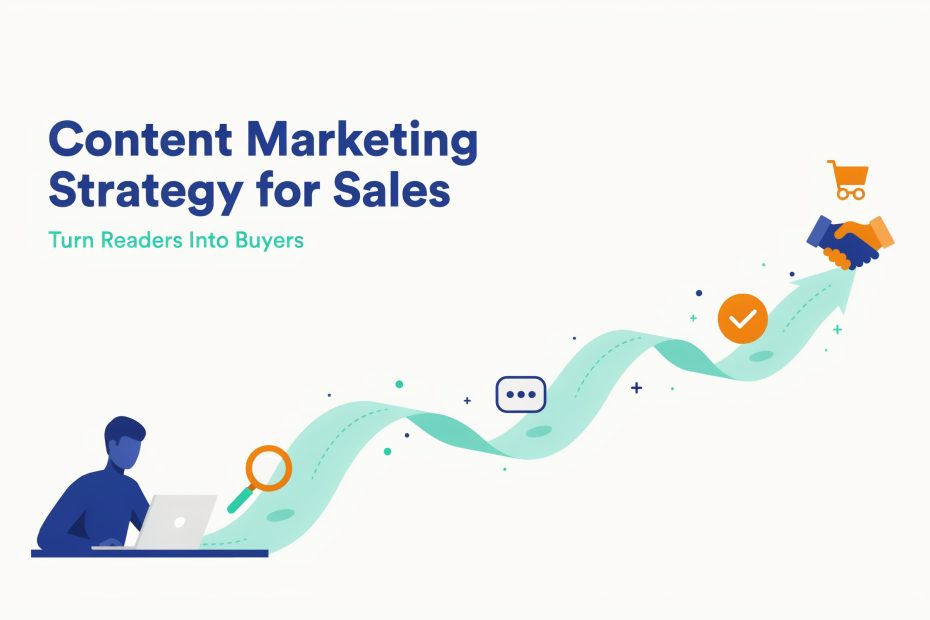
Most businesses write blogs, post on social media, and send emails. But very few of them turn that content into real sales. They get likes, shares, and maybe a few comments. Then nothing happens. No leads. No buyers. Just empty effort. This is why a strong content marketing strategy for sales matters so much. It is not about writing more. It is about writing with a clear goal: to guide someone from “just reading” to “ready to buy.” In this blog, we will break down how to build that kind of strategy, step by step, in simple terms.
What Is a Content Marketing Strategy for Sales?
A content marketing strategy for sales is a plan that connects your content directly to your sales goals. It is not random blog posts or social media updates. Every piece of content has a job to do. Some content brings in new visitors. Some content builds trust. And some content pushes people to take action and buy.
Think of it like a path. Each piece of content is a stepping stone. It moves your reader closer to becoming a paying customer. Without this kind of plan, your content just floats around without direction.
If you want to learn how to build this kind of plan from scratch, our guide on content marketing that converts walks you through the full process in detail.
Why Most Content Fails to Drive Sales
Many businesses create content without asking one simple question: who is this for? They write about topics they think sound smart. But they forget to think about what their reader actually needs at that moment.
Here are common reasons content fails to convert:
- It talks only about the brand, not the customer’s problem
- It has no clear next step for the reader
- It targets the wrong stage of the buying journey
- It lacks a strong call to action
- It is not backed by real keyword research
Fixing these issues does not need a big budget. It needs a clear plan and a better understanding of your audience.
Building a Content Marketing Strategy for Sales: Step by Step
Step 1: Know Your Audience Deeply
Before writing a single word, you need to know who you are writing for. What problems do they have? What questions do they search for online? Or what stops them from buying right now?
Create simple buyer personas. Give them names, jobs, and pain points. This makes it easier to write content that speaks directly to them, not at them.
Step 2: Map Content to the Sales Funnel
Every buyer goes through stages: awareness, consideration, and decision. Your content should match each stage.
- Awareness stage: Blog posts, social media tips, short videos
- Consideration stage: Comparison guides, case studies, webinars
- Decision stage: Product demos, testimonials, free trials
When you match content to the right stage, you stop confusing your reader. You guide them smoothly toward a purchase.
Step 3: Use SEO to Bring in the Right Traffic
SEO is not just about ranking high on Google. It is about bringing in people who actually want what you offer. Use keyword research to find out what your audience is searching for. Then write content around those exact terms.
This is also where on-page SEO matters. Use your primary keyword early in the content. Add it naturally a few more times. Use related terms too, so search engines understand the full context of your page.
Step 4: Add Strong Calls to Action
A blog post without a call to action is like a shop with no door. People come in, look around, and leave without buying anything.
Every piece of content should tell the reader what to do next. This could be:
- “Download our free guide”
- “Book a free consultation”
- “Sign up for a demo”
Keep it simple and clear. Do not make the reader guess what to do.
Turning Content Into Real Sales
Once your strategy is in place, the next job is execution. This means writing content that is not just informative but also persuasive. Good content builds trust first, and trust leads to sales.
This is where the craft of writing matters. It is not enough to share facts. You need to connect with the reader’s emotions and needs. If you want to sharpen this skill, check out our detailed guide on content that converts, which breaks down the exact writing techniques that turn readers into buyers.
How to Measure Success
A good content marketing strategy for sales is not a one-time task. You need to track results and adjust along the way. Some key numbers to watch:
- Website traffic from organic search
- Time spent on page
- Click-through rate on calls to action
- Lead conversion rate
- Customer acquisition cost
These numbers tell you what is working and what needs fixing. Do not be afraid to test different headlines, formats, or calls to action. Small changes often bring big results over time.
Common Mistakes to Avoid
Even with a good plan, mistakes can slow down your results. Watch out for these:
- Publishing content without a clear goal
- Ignoring mobile users when designing pages
- Writing long content with no clear structure
- Skipping keyword research before writing
- Forgetting to update old content that still gets traffic
Avoiding these mistakes keeps your strategy strong and your results steady.
Final Thoughts
A content marketing strategy for sales is not about writing more content. It is about writing the right content, for the right person, at the right time. When you connect your content directly to your sales goals, you stop guessing and start growing.
Start small. Pick one stage of your funnel. Write content that solves a real problem for your reader. Add a clear call to action. Then measure, learn, and improve. Over time, this simple approach builds a content engine that brings in steady, real sales.