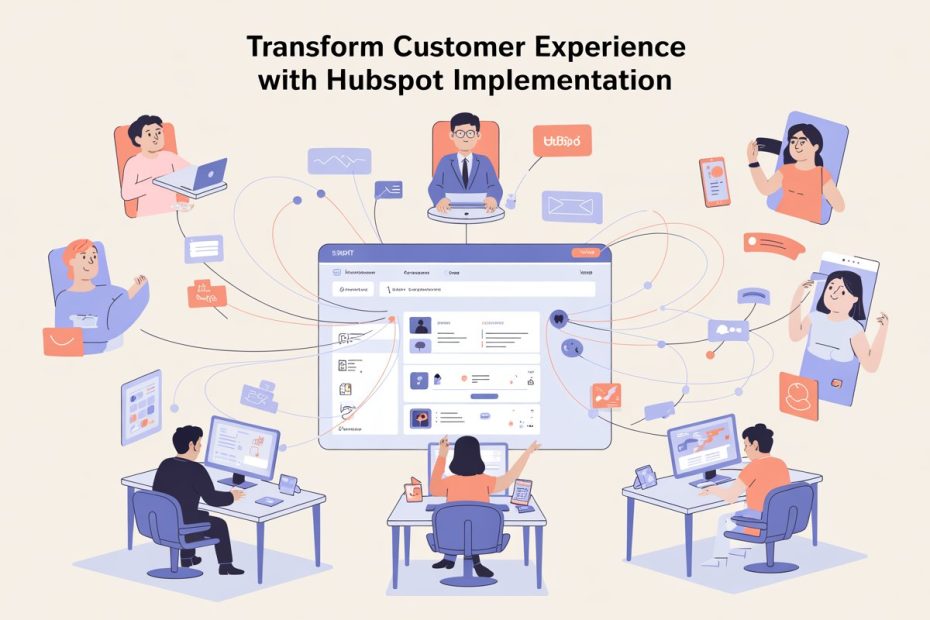
Improving how customers feel when they interact with your brand is not just a nice-to-have anymore. It directly impacts retention, trust, and long-term revenue. One of the most effective ways to achieve this is through HubSpot implementation for customer experience, which helps businesses connect marketing, sales, and service in one smooth system. When done correctly, it allows teams to respond faster, personalize communication, and understand customer needs at every stage of the journey.
Many businesses struggle because their tools are scattered. Marketing uses one platform, sales uses another, and support works in isolation. This creates gaps that frustrate customers. With proper HubSpot setup, all teams work from the same data, which improves coordination and creates a more consistent experience. This is where structured implementation becomes important, not just installing software but designing a system that supports real customer needs.
Building a Connected Customer Journey with HubSpot
A well-planned approach to CRM setup ensures that every customer interaction is recorded and used meaningfully. When businesses ignore structure during onboarding, they often end up with unused features and messy data. On the other hand, a thoughtful approach to HubSpot implementation for customer experience allows companies to design workflows that guide customers smoothly from first contact to long-term loyalty.
The goal is not only automation but also clarity. For example, when a lead enters your system, HubSpot can automatically assign it, trigger follow-up emails, and notify the sales team. This reduces delays and ensures no opportunity is lost. Over time, this creates a system where customers feel heard and supported at every stage. That feeling is what drives satisfaction and repeat business.
Customer expectations are also changing quickly. People want fast replies, personal messages, and smooth communication across channels. Without the right system, businesses fall behind. This is why HubSpot implementation for customer experience plays such a critical role. It brings together email, CRM data, automation, and reporting in one place.
When teams can see the full customer journey, they can make better decisions. Instead of guessing what customers need, businesses can rely on real data. This improves both marketing accuracy and sales performance. It also reduces manual work, allowing teams to focus more on strategy instead of repetitive tasks. A properly set up HubSpot system becomes the backbone of customer communication.
Why HubSpot Implementation Matters for Customer Experience
Strong customer experience depends on how well your internal systems work together. HubSpot helps unify these systems so businesses can deliver consistent and timely communication. This is why structured CRM adoption is more than a technical task; it is a business strategy.
Connecting Marketing, Sales, and Support
When marketing, sales, and support teams operate separately, customers often receive mixed messages. With proper CRM integration, all departments access the same customer data. This ensures that every interaction feels connected and informed. A smooth HubSpot implementation for customer experience helps reduce confusion and builds trust across all touchpoints.
Building a Clear Customer Journey
A customer journey is not just a funnel; it is a series of experiences. HubSpot allows businesses to map this journey in detail. From the first website visit to post-purchase follow-ups, every step can be automated and tracked.
With the right setup, businesses can identify where customers drop off and improve those areas. This leads to stronger engagement and better conversion rates over time.
HubSpot Setup Best Practices for Better Results
To get real value from HubSpot, businesses must follow structured setup methods. A rushed installation often leads to poor performance and unused features. That is why following proven methods is important.
Clean and Organized CRM Data
One of the first steps in HubSpot implementation for customer experience is cleaning your existing data. Duplicate contacts, missing fields, and outdated information can reduce system efficiency. A clean database ensures accurate reporting and better automation results.
You can learn more structured approaches here:
HubSpot implementation best practices
Automating Repetitive Tasks
Automation is one of HubSpot’s strongest features. Tasks like email follow-ups, lead scoring, and customer onboarding can be automated easily. This reduces manual workload and ensures consistency in communication.
When automation is properly designed, customers receive timely and relevant messages, which improves satisfaction without overwhelming your team.
Aligning CRM With Business Goals
A common mistake is setting up HubSpot without clear goals. Businesses must define what they want to achieve—better lead conversion, improved retention, or stronger engagement. Once goals are clear, workflows can be built around them.
This alignment ensures that HubSpot implementation for customer experience delivers real business value instead of just technical setup.
Improving Business Efficiency Through HubSpot
Efficiency is closely linked with customer satisfaction. When internal systems work smoothly, customers receive faster responses and better service.
HubSpot helps businesses reduce delays by automating communication and centralizing data. This allows teams to focus more on meaningful customer interactions instead of administrative tasks.
You can explore more about this here:
HubSpot implementation for business efficiency
Creating Long-Term Customer Relationships
A strong CRM system does more than manage contacts. It helps businesses build relationships. With HubSpot, companies can track customer behavior, personalize messages, and engage at the right time.
Personalized Communication at Scale
Personalization is no longer optional. Customers expect brands to understand their needs. HubSpot makes it easier to segment audiences and send targeted messages based on behavior, interests, or past interactions.
This level of personalization strengthens trust and improves long-term engagement.
Tracking Customer Satisfaction
Feedback and analytics tools in HubSpot allow businesses to measure satisfaction levels. Surveys, response tracking, and engagement reports help identify areas for improvement. This ensures that customer experience continues to evolve over time.
Final Thoughts
A well-executed CRM strategy can completely change how customers interact with a brand. HubSpot implementation for customer experience is not just about software setup; it is about building a connected system that improves communication, efficiency, and trust.
When businesses take time to plan their setup, follow best practices, and align tools with goals, they create a system that supports long-term growth. The result is not just better marketing or sales performance but stronger relationships with customers who feel understood and valued.