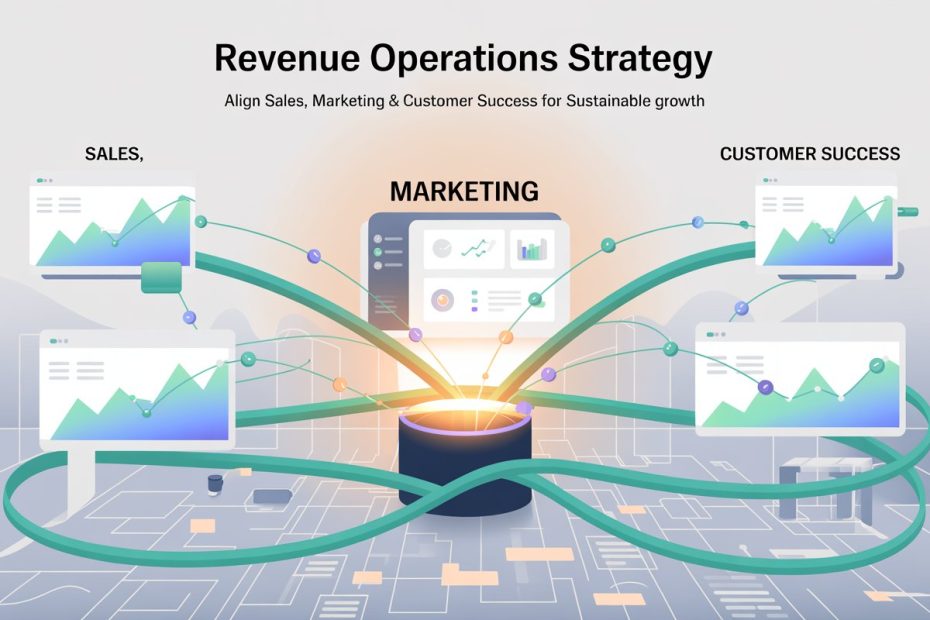
Many companies struggle to grow because their teams work in silos. Sales, marketing, and customer success often follow different goals, tools, and data. This lack of alignment leads to missed opportunities, poor customer experience, and slow revenue growth. A clear revenue operations strategy helps solve this problem by bringing all revenue-related teams under one system and direction.
When teams align, businesses gain better visibility into the full customer journey. They can track leads, close deals faster, and retain customers more effectively. This guide explains how to build a strong approach using a practical revenue operations framework that supports long-term growth.
What is Revenue Operations?
Revenue Operations, often called RevOps, is a system that connects sales, marketing, and customer success. It focuses on shared goals, unified data, and smooth processes. Instead of teams working separately, RevOps creates one clear path from lead generation to customer retention.
A solid revenue operations model ensures that all teams use the same data and tools. This reduces confusion and improves decision-making. It also helps leaders understand what drives revenue and where improvements are needed.
Why a Revenue Operations Strategy Matters
A strong revenue operations strategy helps businesses remove gaps between teams. When everyone follows the same plan, work becomes faster and more effective.
Here are some key benefits:
Better Team Alignment
When teams share the same goals, they communicate better. This improves sales and marketing alignment strategy and builds trust across departments.
Clear Data and Insights
RevOps connects systems like CRM and analytics tools. This creates one source of truth for all teams. It supports better data-driven decision making.
Improved Customer Experience
Customers get a smooth journey from first contact to long-term support. This improves satisfaction and retention.
Higher Revenue Growth
Aligned teams close deals faster and keep customers longer. This directly improves overall performance.
Key Components of a Revenue Operations Framework
To build a strong system, you need to focus on a few core areas. A well-designed revenue operations framework includes the following:
People and Team Structure
Define roles clearly. A proper RevOps team structure often includes operations managers, data analysts, and system specialists. Their goal is to support all revenue teams.
Processes and Workflows
Create simple and repeatable workflows. These should cover lead generation, sales pipeline, and customer onboarding. Clear steps improve efficiency and reduce errors.
Technology and Tools
Use the right revenue operations tools such as CRM platforms, marketing automation, and reporting systems. Integration is key for smooth operations.
Data and Metrics
Track important RevOps KPIs and metrics like conversion rates, customer acquisition cost, and lifetime value. These numbers guide your strategy.
How to Build a Revenue Operations Strategy
Building a strong plan does not need to be complex. Follow these steps to create a reliable RevOps strategy guide for your business.
Step 1: Align Teams Around Common Goals
Start by setting shared goals for sales, marketing, and customer success. Focus on revenue growth, not just individual targets. This helps in aligning sales marketing and customer success.
Step 2: Map the Customer Journey
Understand every stage of your customer journey. From awareness to retention, identify gaps and areas for improvement. This supports customer journey optimization.
Step 3: Integrate Your Tools
Connect your CRM, marketing tools, and analytics systems. Strong CRM and RevOps integration ensures all teams work with the same data.
Step 4: Define Clear Processes
Build workflows for each stage of the funnel. This includes lead management, deal tracking, and customer onboarding. A clear sales funnel optimization strategy improves results.
Step 5: Track and Improve Performance
Measure results using key metrics. Regularly review performance and adjust your strategy. This improves revenue performance management over time.
Common RevOps Challenges and Solutions
Even with a good plan, businesses may face challenges. Here are some common issues and how to solve them:
Lack of Communication
Teams may still work separately. Solve this by holding regular meetings and sharing updates across departments.
Poor Data Quality
Incomplete or incorrect data can harm decisions. Clean your data regularly and set clear rules for data entry.
Tool Overload
Using too many tools can create confusion. Focus on a few key platforms and ensure proper integration.
Resistance to Change
Some teams may resist new systems. Provide training and show the value of RevOps to gain support.
Best Practices for Revenue Operations Success
To get the most from your revenue operations strategy, follow these best practices:
- Keep processes simple and easy to follow
- Focus on shared goals instead of team-based targets
- Use automation to reduce manual work
- Review your pipeline management best practices regularly
- Encourage collaboration across teams
How RevOps Drives Long-Term Growth
A strong revenue operations strategy does more than improve daily tasks. It builds a system that supports long-term success. When teams work together, businesses can scale faster and adapt to changes easily.
RevOps also helps companies respond to customer needs quickly. With better insights and aligned teams, businesses can improve both acquisition and retention. This leads to steady and predictable growth.
Final Thoughts
A well-planned revenue operations strategy helps businesses break silos and align teams for better results. By focusing on people, processes, tools, and data, companies can build a system that supports growth at every stage.
If you want to improve your business performance, start by reviewing your current processes. Identify gaps, align your teams, and build a strong RevOps foundation. Over time, this approach will help you achieve consistent and scalable growth.